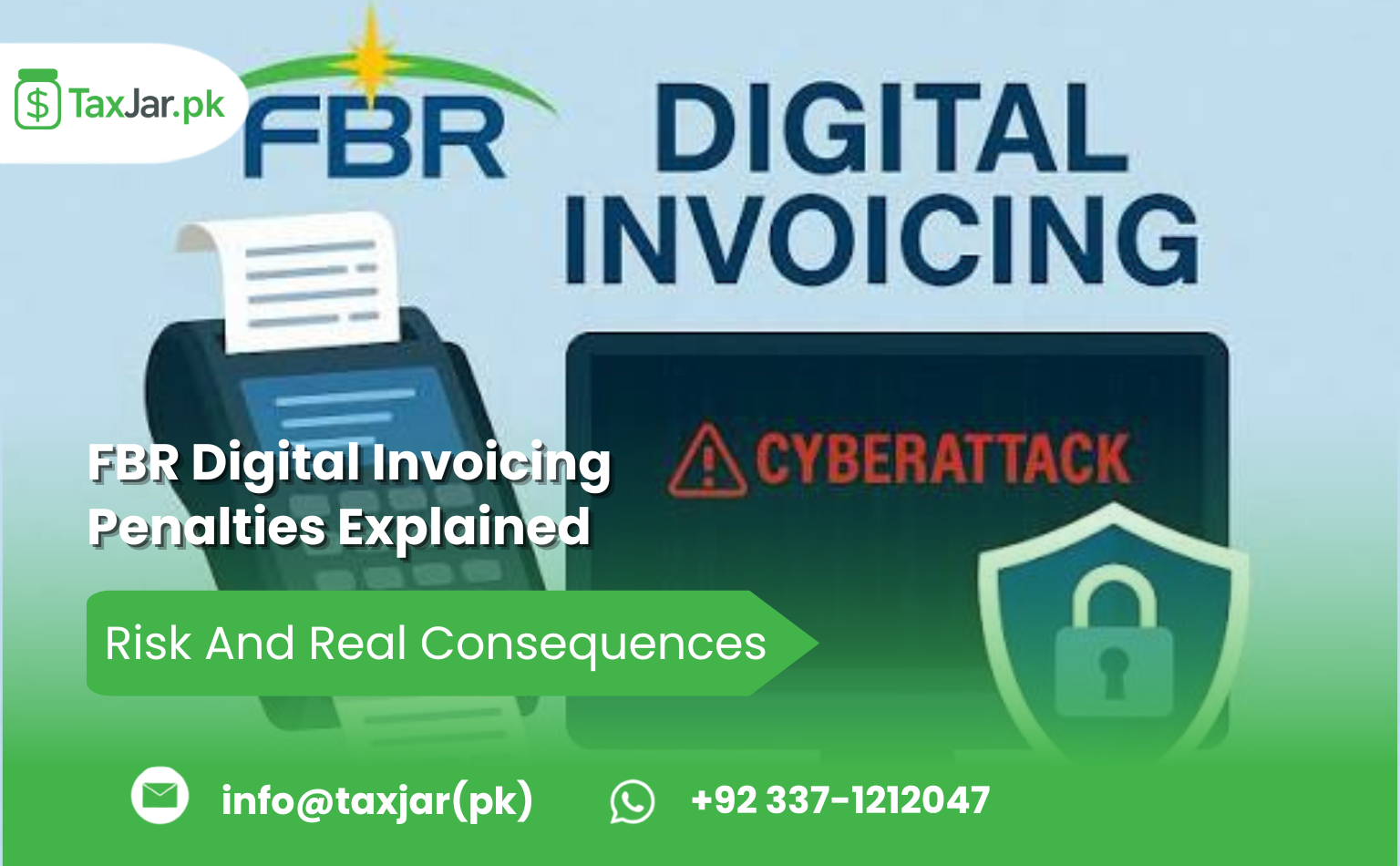
The consequences of digital invoicing violations vary depending on the circumstances. There is no single penalty that applies to every business or every invoicing mistake. Applicable penalties can depend on factors such as the type of taxpayer, the relevant tax legislation, the nature of the non-compliance, the frequency of violations, and whether the business has failed to comply with a specific FBR requirement. Possible consequences may include monetary penalties, notices, audits, additional compliance requirements, or other legal and administrative actions under applicable tax regulations. Because FBR rules can change, businesses should verify current requirements and penalty provisions through official FBR sources or qualified tax professionals.
Errors in sales tax calculations, customer information, invoice values, tax rates, or transaction details can create discrepancies between business records and reported information. Repeated inaccuracies may increase the risk of tax inquiries and require businesses to spend additional time correcting records. Automated tax calculations and validation tools can help reduce human errors and improve invoice accuracy.
Tax penalties and compliance issues can have a direct impact on business cash flow. Unexpected financial liabilities can place additional pressure on businesses, particularly small and medium-sized enterprises operating with limited working capital. Administrative costs can also increase when staff members need to correct invoices, respond to notices, reconcile records, or prepare documentation for tax authorities. Maintaining accurate digital records from the beginning helps businesses avoid many unnecessary costs.
Tax compliance can influence a company’s professional reputation. Businesses that maintain accurate records and meet regulatory requirements demonstrate responsible financial management. On the other hand, repeated compliance issues can create operational difficulties and potentially affect relationships with customers, suppliers, financial institutions, and business partners. A reliable digital invoicing system supports a more professional and transparent business environment.
Role of Automated FBR Digital Invoicing Software
Automated invoicing software can significantly reduce the risk of manual errors. Instead of creating every invoice from scratch, businesses can use standardized templates, automated calculations, customer databases, and validation tools. Modern systems can also generate reports that help businesses reconcile sales and tax information. Automation improves consistency while reducing the administrative workload associated with digital invoicing.
How TaxJar.pk Helps Reduce Digital Invoicing Risks
TaxJar.pk is a comprehensive FBR Digital Invoicing Software designed to help businesses manage digital invoices and tax-related records more efficiently. The platform simplifies invoice generation, customer management, tax calculations, transaction tracking, and financial reporting through a centralized digital system. With TaxJar.pk, businesses can create structured digital invoices while reducing repetitive manual data entry. Automated calculations help improve tax accuracy, while organized records make it easier to monitor sales and tax information. The platform also provides real-time reporting and dashboards that help businesses understand invoice activity, sales performance, and tax obligations. Secure cloud-based storage supports reliable record management with features such as controlled access and data backups. TaxJar.pk can support retailers, wholesalers, manufacturers, distributors, service providers, eCommerce businesses, and other organizations that need efficient digital invoicing and tax management. By combining digital invoicing with automated recordkeeping and reporting, TaxJar.pk helps businesses reduce administrative errors, improve financial visibility, and build stronger compliance processes.
What Happens During a Tax Compliance Review?
If FBR identifies discrepancies or requests information, businesses may need to provide relevant financial records and supporting documentation. Accurate digital invoices and organized accounting records make it easier to respond to such requests. Businesses should retain appropriate documentation according to applicable recordkeeping requirements and ensure that reported information can be reconciled with their underlying financial records. Professional tax advice may be appropriate when dealing with formal notices, audits, or complex tax disputes.
Keeping Up With Changing FBR Requirements
FBR tax requirements can change through legislation, notifications, circulars, and regulatory updates. Businesses should not rely on outdated information when making compliance decisions. Using software that is regularly maintained and following official FBR announcements can help businesses stay informed. Tax compliance should be treated as an ongoing business process rather than a once-a-year activity.
Future of Digital Tax Compliance in Pakistan
Pakistan’s tax environment is becoming increasingly digital. Automated invoicing, electronic reporting, integrated financial systems, and data-driven tax administration are likely to play a larger role in the future. Businesses that adopt digital compliance tools early can improve their operational efficiency while becoming better prepared for evolving regulatory requirements. Digital transformation can turn tax compliance from a manual burden into a more organized business process.
Conclusion
Understanding FBR Digital Invoicing Penalties, Risks, and Real Consequences is essential for businesses operating in Pakistan. Non-compliance can create financial, administrative, and operational risks, while inaccurate records may make it more difficult to respond to tax inquiries. Businesses should understand the requirements that apply to them, maintain accurate transaction records, issue invoices correctly, and keep their digital invoicing systems updated. Since specific penalties can vary according to current laws and taxpayer circumstances, businesses should verify the latest requirements through official FBR resources or qualified tax professionals. TaxJar.pk provides businesses with a modern FBR Digital Invoicing Software solution that simplifies invoice generation, tax calculations, transaction management, reporting, and digital recordkeeping. By reducing manual work and improving financial visibility, TaxJar.pk helps businesses build efficient invoicing processes and strengthen their approach to FBR tax compliance.
Latest Blogs