FBR digital invoicing requirements can differ according to taxpayer status, business category, sector, and applicable regulations. Certain registered businesses may be required to integrate their invoicing systems with FBR-approved or prescribed systems, while other businesses may have different obligations. Because requirements and implementation schedules can change, businesses should verify their specific obligations through the latest official FBR notifications, rules, and technical guidance. Using updated compliance software can help businesses adapt more efficiently when requirements change.
A compliant digital invoice generally needs accurate transaction information that allows the sale to be identified and reconciled. This may include seller and buyer information, invoice details, product or service information, prices, applicable taxes, and transaction totals. Businesses should ensure that information entered into their invoicing system matches their accounting and tax records. Accurate data is essential because errors can create reconciliation problems and lead to compliance issues.
Sales tax and other applicable tax calculations must be handled carefully. Manual calculations can create errors, particularly when businesses process large numbers of transactions or deal with multiple products and tax rates. Automated invoicing software can calculate applicable tax amounts based on configured rules and transaction information. Businesses should still review their tax settings regularly and ensure they reflect current legal requirements.
Maintaining organized digital records is an important part of effective tax compliance. Businesses should retain invoices, sales information, purchase records, tax calculations, and supporting documentation in accordance with applicable recordkeeping requirements. Digital storage makes it easier to search for historical transactions and prepare information when required for tax reporting or review. Cloud-based invoicing systems can also provide secure access to financial information while reducing dependence on physical paperwork.
Following applicable digital invoicing requirements can help businesses improve financial transparency and reduce administrative problems. Digital invoices provide consistent records, simplify transaction tracking, and support more efficient tax reconciliation. Businesses can also benefit from faster invoice generation and improved access to financial information. Most importantly, maintaining appropriate digital records helps organizations establish stronger internal controls and reduce avoidable compliance risks.
Role of Automated FBR Digital Invoicing Software
Automated FBR Digital Invoicing Software can simplify compliance by standardizing invoice creation and reducing manual data entry. It can also help businesses calculate taxes, manage customer records, store transaction data, and generate financial reports. Automated validation can identify missing or inconsistent information before invoices are finalized. This allows businesses to spend less time on repetitive administrative work and more time focusing on core operations.
How TaxJar.pk Helps Businesses With FBR Digital Invoicing
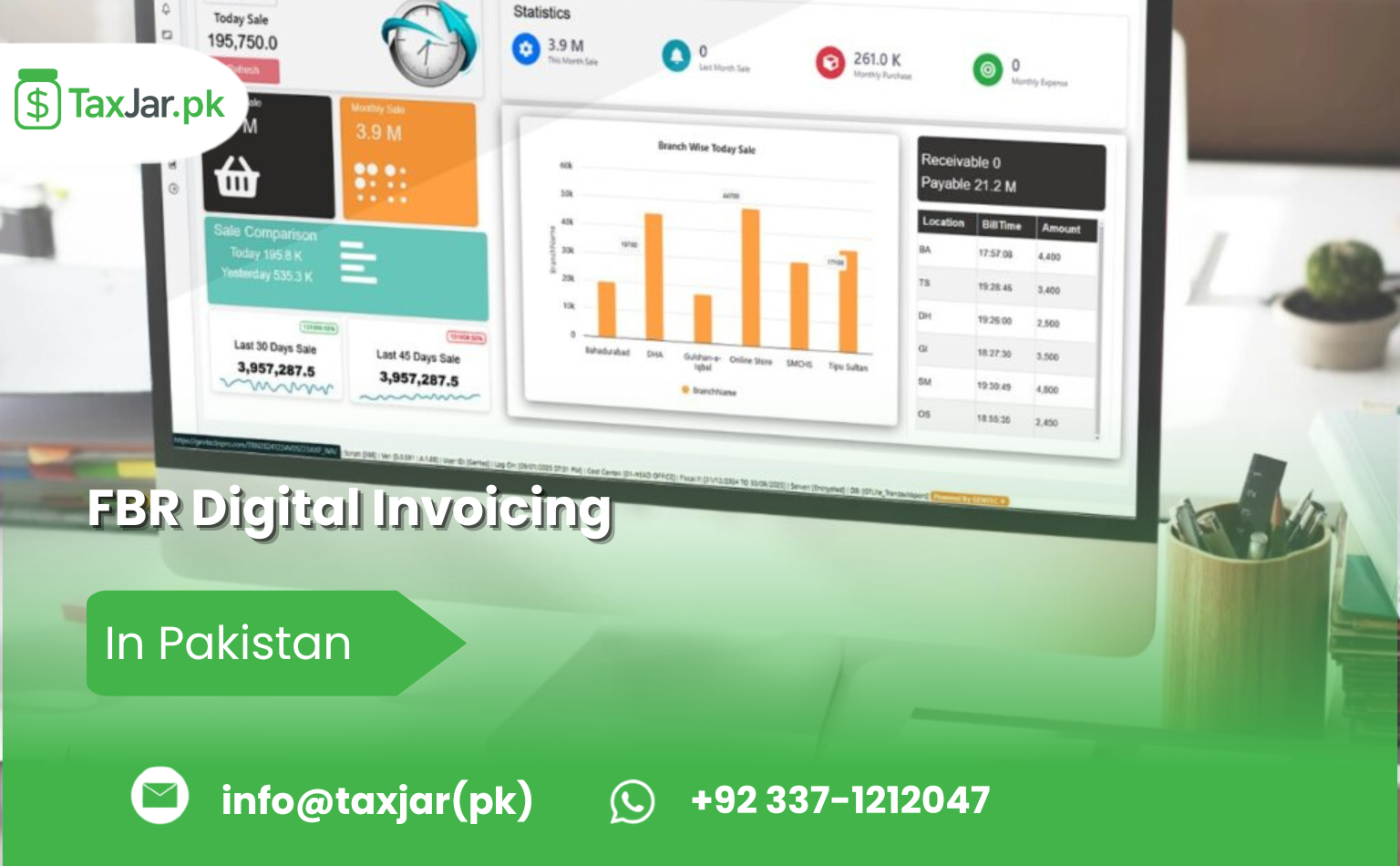
TaxJar.pk is a comprehensive FBR Digital Invoicing Software designed to help Pakistani businesses manage invoices and tax records efficiently. The platform brings digital invoicing, tax calculations, transaction management, reporting, and compliance support into one centralized system. With TaxJar.pk, businesses can generate professional digital invoices, organize customer information, maintain transaction histories, and monitor tax-related data through an easy-to-use interface. Automated processes help reduce repetitive manual entry and improve data consistency. TaxJar.pk also provides real-time reporting and dashboards that allow businesses to monitor invoice activity, sales performance, and tax information. Secure cloud-based storage helps protect financial records through controlled access and data backup capabilities. The platform can support retailers, wholesalers, manufacturers, distributors, service providers, eCommerce companies, and other businesses that need an efficient digital invoicing system. By combining invoice automation with organized financial reporting, TaxJar.pk helps businesses build stronger internal processes and prepare for evolving FBR digital compliance requirements.
FBR Digital Invoicing and Tax Reporting
Digital invoicing can make tax reporting more efficient because transaction information is already organized electronically. Businesses can reconcile sales records with accounting information and use digital invoice data to support tax calculations and reporting. Accurate digital records also make it easier to identify discrepancies before tax returns are prepared. An integrated approach to invoicing and tax management can therefore improve overall financial accuracy.
Risks of Non-Compliance
Failure to follow applicable FBR digital invoicing requirements can expose businesses to compliance risks. Depending on the circumstances and applicable law, businesses may face notices, penalties, audits, or other regulatory consequences. Businesses should not rely on outdated information because FBR requirements can change through legislation, notifications, and implementation updates. Maintaining an updated invoicing system and reviewing official FBR guidance regularly can help reduce compliance risks.
The Future of Digital Invoicing in Pakistan
Pakistan’s tax environment is moving toward greater digital integration. As electronic reporting, automated tax systems, and data-driven compliance continue to develop, businesses will increasingly depend on digital financial tools. Organizations that adopt reliable invoicing technology can benefit from better efficiency, improved financial visibility, and stronger preparedness for future requirements. Digital transformation is becoming an important part of modern business management in Pakistan.
Conclusion
Understanding FBR Digital Invoicing Rules in Pakistan is essential for businesses that want to maintain accurate financial records and comply with applicable tax requirements. Digital invoicing can improve transparency, reduce manual errors, simplify tax reporting, and create a more efficient financial workflow. Businesses should regularly review current FBR requirements, maintain accurate transaction records, train employees, and use reliable digital tools to manage invoicing. TaxJar.pk provides businesses with a complete FBR Digital Invoicing Software solution that simplifies invoice generation, tax calculations, transaction management, reporting, and digital recordkeeping. By using automation and centralized financial management, businesses can reduce administrative workload, improve accuracy, and build a stronger foundation for ongoing FBR compliance.
Latest Blogs