The Ultimate Guide to the FBR Digital Invoicing System in Pakistan

Digital Invoice Processing in Pakistan

The push for a documented economy in Pakistan has reached a fever pitch with the rollout of the FBR digital invoicing system. This initiative represents a seismic shift from traditional, opaque bookkeeping to a transparent, real-time fiscal environment. By mandating that businesses link their transaction data directly to the Federal Board of Revenue’s (FBR) servers, the government is not just collecting taxes; it is building a digital infrastructure that aims to level the playing field for honest taxpayers while making tax evasion nearly impossible.

The Architecture of the FBR Digital Invoicing System

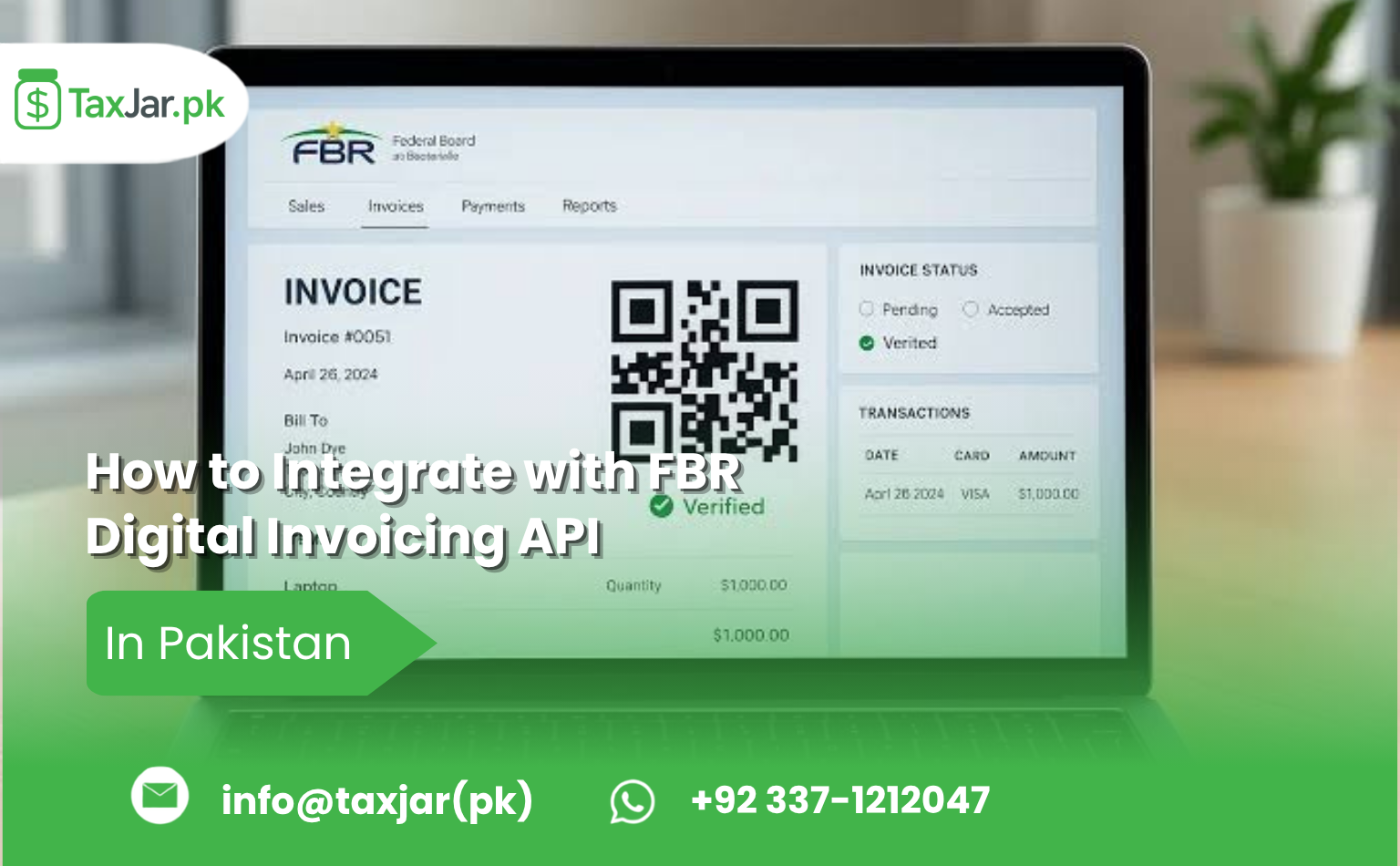
At its core, digital invoicing in Pakistan is an API-based ecosystem where every sale is validated by the government before it is even finalized. Unlike the old “Point of Sale” (POS) systems that merely stored data locally, the current fbr digital invoicing framework requires a continuous, live connection. When a business generates an invoice, the data is instantly transmitted to the FBR’s central portal. The system validates the buyer’s NTN, checks the tax rates, and returns a unique Invoice Reference Number (IRN) along with a QR Code. This process, often referred to as “fiscalization,” ensures that the invoice is legally recognized for sales tax purposes. For the consumer, the QR code on the receipt serves as a certificate of authenticity; they can scan it using the Taxjar.pk to verify that the tax they paid has actually been recorded in the government’s ledger. This three-way handshake between the seller, the FBR, and the buyer creates a self-policing mechanism that is the cornerstone of modern digital invoice processing.

Mastering Compliance: The FBR Digital Invoicing User Manual

For any business, the first step toward integration is a deep dive into the fbr digital invoicing user manual. This document is more than just a technical guide; it is a regulatory requirement that outlines the standards for data transmission and system security. According to the manual, businesses must first ensure their NTN and Sales Tax Registration (STRN) are active on the IRIS 2.0 portal. From there, the manual details the process of “IP Whitelisting,” where a business must register the specific server addresses that will be communicating with the FBR to prevent unauthorized data injections. The manual also provides a rigorous testing protocol known as the Sandbox Environment. Before a company can go “Live,” they must successfully transmit a series of test invoices that cover various scenarios—such as standard sales, credit notes for returns, and debit notes for price adjustments. Only after the FBR’s system confirms that the business’s software can handle these scenarios without errors is a “Production Token” issued. This meticulous onboarding process, detailed in the fbr digital invoicing user manual, ensures that once a business is integrated, the flow of data remains stable and compliant with the Sales Tax Act.

The Ultimate Guide to the FBR

The Power of Real-Time Digital Invoice Processing

The transition to digital invoice processing offers a massive efficiency boost for the corporate sector. In the traditional model, accountants spent days, if not weeks, reconciling physical invoices and manually entering data into monthly sales tax returns. With the digital system, this labor-intensive process is automated. Since every invoice is already recorded on the FBR server at the time of sale, the monthly Annexure-C and Annexure-A are pre-populated. This means that filing a tax return is becoming less about data entry and more about data verification. Beyond ease of filing, digital processing is a critical tool for “Input Tax Credit” verification. In the past, “flying invoices” fake receipts used to claim fraudulent tax refunds cost the national exchequer billions. Now, if a supplier is not integrated with the fbr digital invoicing system or fails to report a sale, the buyer cannot claim the input tax credit. This “locked” ecosystem forces every player in the supply chain to remain compliant, as non-compliance by one party directly penalizes their business partners. It essentially automates the audit process, allowing the FBR to identify discrepancies in real-time rather than discovering them years later during a manual audit.

Support and Troubleshooting: FBR Digital Invoicing Helpline

Despite the benefits, the technical complexity of integrating ERP systems like SAP, Oracle, or local software with the FBR can lead to bottlenecks. To address this, the fbr digital invoicing helpline (+92337-1212047) and the dedicated Customer Relationship Management (CRM) help desk play a vital role. These channels provide technical assistance for API failures, “Token Expired” errors, and synchronization issues that can occur during high-traffic periods. Moreover, the FBR has introduced a licensing regime for Certified Integrators. These are third-party tech firms authorized to bridge the gap between a business’s internal software and the FBR’s servers. If a business owner finds the user manual too technical, they are encouraged to contact these licensed partners or use the helpline to find a compatible solution. This support structure is designed to ensure that technical glitches do not result in legal penalties, provided the business shows a “good faith” effort to resolve issues and report sales within the 24-hour grace period allowed during internet outages.

Taxjar.pk – Smart Solution for FBR Digital Invoicing

Businesses in Pakistan looking for a reliable digital invoicing system can streamline their operations with Taxjar.pk, a modern platform designed to simplify FBR digital invoicing and automated billing processes. Our platform is built to support digital invoice processing while maintaining full compliance with the FBR digital invoicing framework. With powerful automation features, businesses can generate invoices, validate transaction data, and transmit records directly to the FBR system without manual intervention. Using Taxjar.pk, companies can easily manage thousands of invoices while ensuring real-time reporting to the FBR digital invoicing platform. The software integrates smoothly with POS systems, ERP solutions, and accounting software, making it ideal for retailers, wholesalers, and service providers.

Conclusion: A Mandatory Future

Digital invoicing for small businesses helps startups compete. Tools cost from affordable per month. Recurring invoices handle subscriptions. Bulk send saves time. The digital invoicing FBR deadline affects SMEs. Free trials of FBR digital invoicing system tools provide full compliance. Add unlimited clients without extra fees. Get payment reminders in Urdu or English. Track profits per project easily. This levels the field against bigger rivals.